Portugal NHR vs Spain Beckham Law 2026: Which Tax Regime Wins for Digital Nomads?

In the Portugal NHR vs Spain Beckham Law debate, the answer in 2026 is clearer than it has been for years. Portugal’s original NHR is closed to new applicants, its replacement (IFICI) is narrow and tied to specific activities, and Spain’s Beckham Law now covers digital nomad visa holders explicitly. Portugal’s citizenship timeline also doubled in May 2026, which removes one of the strongest arguments for choosing it.
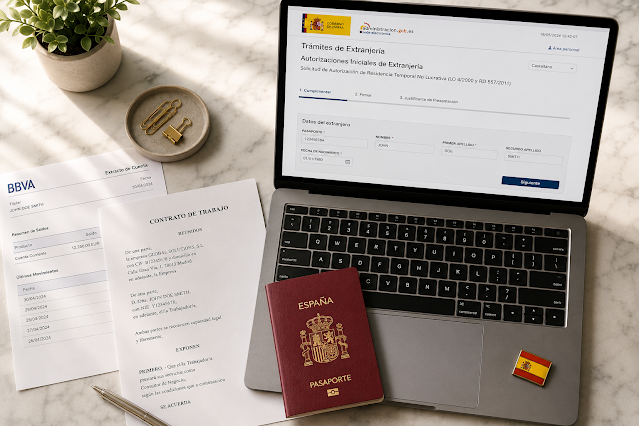
For years the Portugal vs Spain debate was genuinely close. Portugal’s NHR offered a 20% flat rate and broad foreign income exemptions for 10 years, and it attracted tens of thousands of nomads to Lisbon and Porto. It has since been replaced by IFICI (often called NHR 2.0), which keeps the 20% rate and the 10-year term but applies only to listed activities. Spain’s Beckham Law was extended by the 2022 Startup Act to cover digital nomad visa holders, who were previously excluded.
Before you compare regimes, check whether you would actually be a tax resident. Our tax residency guide explains the 183-day rule and the other tests countries use.
💰 Tax Rate Comparison: The Fine Print
At first glance Portugal wins on percentage: 20% against Spain’s 24%. The fine print changes the picture for most nomads.
| Factor | 🇪🇸 Spain Beckham Law | 🇵🇹 Portugal IFICI |
|---|---|---|
| Flat rate | 24% on Spanish-source income up to €600,000 | 20% on qualifying Portuguese employment or self-employment income |
| Above the cap | 47% on the part above €600,000 | No formal cap |
| Duration | Year of arrival plus 5 more years | 10 consecutive years |
| Who qualifies | Remote workers with the digital nomad visa who weren’t Spanish tax residents in the previous 5 years | People in listed activities (research, certain tech and qualified roles, startups) who weren’t Portuguese tax residents in the previous 5 years |
| Foreign income | Work you do while living in Spain counts as Spanish income, so your remote salary pays the 24%. Most other foreign income, such as dividends, is generally exempt. | Most foreign income is exempt, but pensions are not |
| Freelancers | Less certain than for employees. Check with a Spanish tax adviser. | Only if the activity is on the qualifying list |
| How to apply | Modelo 149 within 6 months of your Social Security registration | By 15 January of the year after you become tax resident |
⚠️ The IFICI eligibility problem
IFICI is not open to digital nomads in general. For freelancers and remote workers, working remotely is not enough on its own: the activity has to fall into a listed category. Don’t assume that being a software engineer, marketer or consultant qualifies. If you don’t qualify, you are taxed under Portugal’s standard progressive rates, which run from 12.5% to 48%, on your worldwide income once you are tax resident. Check your eligibility with a Portuguese tax adviser before you plan around the 20% rate.
🧮 Real Money: Tax by Income Level
Here is what the headline rates mean in euros for someone who fully qualifies under both regimes. These are simplified illustrations: they ignore social security contributions, deductions and cost-of-living differences.
| Annual income | 🇪🇸 Spain (24%) | 🇵🇹 Portugal (20%) | Difference |
|---|---|---|---|
| €36,000 (€3,000/month) | €8,640 | €7,200 | Portugal saves €1,440 |
| €60,000 (€5,000/month) | €14,400 | €12,000 | Portugal saves €2,400 |
| €100,000 (€8,300/month) | €24,000 | €20,000 | Portugal saves €4,000 |
On paper Portugal saves money at every level below €600,000, but only if you qualify for IFICI and your income counts as qualifying Portuguese income, which most general nomads do not. For them, the realistic comparison is the Beckham Law at 24% against standard rates in the country they pick.
🛂 Visa Requirements Compared
| Factor | 🇪🇸 Spain digital nomad visa | 🇵🇹 Portugal D8 |
|---|---|---|
| Minimum income | About €2,849 a month (200% of the Spanish minimum wage) | €3,680 a month in 2026 (4× the €920 minimum wage) |
| Initial permit | 1 year via a consulate, up to 3 years via the UGE inside Spain | 2-year residence permit, issued after an AIMA appointment following arrival |
| Processing | Often a few weeks through the Spanish authorities | Can take months, and appointment waits are a common bottleneck |
| Permanent residency | After 5 years | After 5 years |
| Citizenship | Generally 10 years | 10 years (7 for EU and CPLP nationals), counted from the first residence permit |
| Health insurance | Required, with full cover in Spain and no co-payments | Required |
| Local clients | No more than 20% of income from Spanish clients | Income must be active remote-work income from outside Portugal |
🚫 Portugal’s 5-year citizenship path is gone
This is a major change from older guides. Portugal’s new nationality law, in force since 19 May 2026, raised the residence requirement for most nationalities from 5 to 10 years, and to 7 years for EU and CPLP nationals. The clock starts when your first residence permit is issued, and time spent waiting for the permit does not count. Citizenship is no longer a reason to choose Portugal over Spain.
💡 The D8 threshold moves every year
The D8 income test is tied to the Portuguese minimum wage, so it rises when the minimum wage does. Use the figure for the year of your appointment, not an older guide.
🏙️ Cost of Living: Where Your Money Goes Further
These are rough monthly estimates for one person. Check current prices before you decide.
| City | 🇪🇸 Spain | 🇵🇹 Portugal |
|---|---|---|
| Capital | Madrid: €2,000–3,200 | Lisbon: €1,800–2,800 |
| Second city | Barcelona: €2,200–3,500 | Porto: €1,400–2,200 |
| Budget option | Málaga: €1,400–2,200 | Braga: €1,100–1,800 |
Both countries have good coworking in their main cities and large nomad communities. English is widely spoken in the big cities of both. Málaga has become a popular alternative to Lisbon for nomads who want a warm climate and good infrastructure at a similar cost.
🎯 Which Country Fits Your Situation?
If your role is on the IFICI list, Portugal’s 20% rate and 10-year term can beat the Beckham Law. If it isn’t, Spain is the simpler path. Get an adviser to confirm before you decide.
Most non-technical freelancers don’t qualify for IFICI. Spain’s nomad visa is open to freelancers, but whether you can also use the Beckham Law as a self-employed person is less certain than for employees, so verify it first.
Founders can fit either regime depending on how they are employed and paid. This is a case for a specialist adviser in both countries.
Most creative work is not on the IFICI list. Look at your exact activity before you count on the 20% rate.
Each visa raises the income requirement for dependents, and school options differ by city. Compare the full family budget, not only the tax rate.
Portugal now takes 10 years (7 for EU and CPLP nationals) and Spain generally takes 10. Neither is a fast route any more.
⚠️ Critical Warnings for 2026
🚫 The Beckham Law is not automatic
You apply separately, with Modelo 149, within 6 months of your Spanish Social Security registration. The window cannot be extended, and missing it means losing the regime for good. You then pay Spanish standard rates, which go up to 47%.
⚠️ Expect checks on your eligibility
Spanish authorities look at whether you meet the conditions, so keep clean contracts, invoices and income records, and speak to a Spanish tax adviser before you apply. Foreign assets worth more than €50,000 must also be declared on Modelo 720, even under the Beckham Law.
💡 Breaking your home country tax residency
Tax residency doesn’t end automatically when you move. You may need to formally break tax residency at home, or you can owe tax there as well. This applies to both Spain and Portugal. US citizens are taxed on worldwide income wherever they live, and the Foreign Earned Income Exclusion has to be claimed separately.
❓ Frequently Asked Questions
Can I be tax resident in both Spain and Portugal?
In practice you need to pick one country as your main base and tax residence. Splitting your time can create conflicts and double taxation questions, so get advice before you try it.
Is Portugal’s IFICI open to general digital nomads?
No. It is aimed at specific activities such as research, certain qualified jobs and certified startups. Remote work on its own is not enough, so many freelancers and online business owners won’t qualify.
Which country has the faster path to EU citizenship?
Neither is fast. Portugal now requires 10 years of legal residence for most nationalities (7 for EU and CPLP nationals), counted from your first residence permit. Spain generally requires 10 years, with shorter periods for some nationalities.
What is Madrid’s Mbappé Law?
It is a regional deduction in the Community of Madrid, not a national law. New Madrid tax residents can deduct 20% of certain qualifying investments from the regional part of their income tax. It cannot be combined with the Beckham Law, because the Beckham Law places you under a special status that excludes regional deductions.
Which visa is easier if I earn under €3,000 a month?
Check the thresholds first. Spain’s nomad visa asks for about €2,849 a month and Portugal’s D8 for €3,680, so below about €2,849 you may not meet either one. In that case, look at countries with lower income requirements.
Everything you need whether you choose Spain or Portugal. Some links are affiliate links.
Keep Reading
Spain vs Portugal 2026: The Updated Answer
For most digital nomads, Spain is still the more accessible option. Portugal’s IFICI can be the better regime on paper, with 20% and 10 years, but it only applies to listed activities, and most nomads can’t count on it.
If your activity is on the IFICI list, Portugal can still be the stronger tax choice. Confirm it with a Portuguese tax adviser before you decide, not after.
If you don’t qualify for IFICI, Spain’s Beckham Law at 24% is the best flat-rate option available to most remote workers, as long as you meet its conditions. Employees are in the clearest position, and freelancers should check their eligibility first.
Citizenship no longer separates them. Portugal’s timeline is now 10 years for most nationalities, so don’t choose it for a fast second passport.