Thailand DTV Visa 2026: Complete Application Guide for Digital Nomads
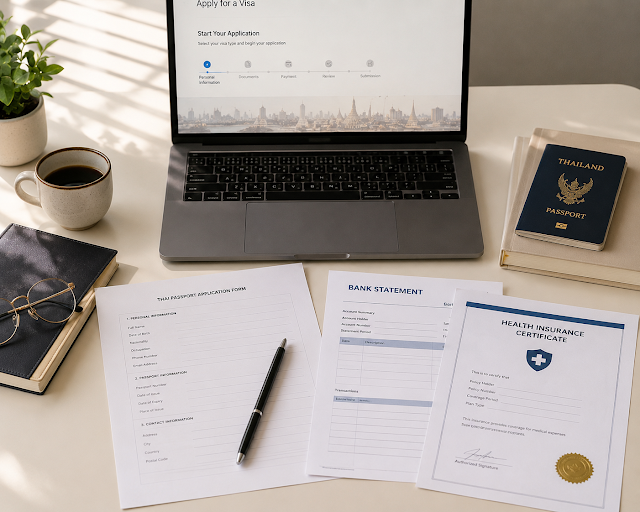
The Thailand DTV visa (Destination Thailand Visa) is one of the most generous digital nomad visas in the world: 5 years of validity and 180 days per entry, extendable once to 360. But the rules changed on 31 August 2026, and the paperwork now catches many nomads off guard. This guide covers every requirement, every document and every mistake to avoid in 2026.
The DTV launched in 2024. Since 31 August 2026, applicants must also show proof of permanent residence in the country where they apply and a criminal record certificate, which effectively ends applying at any embassy you like. This guide reflects the current reality, not the original marketing material.
🇹🇭 What Is the Thailand DTV Visa?
The Destination Thailand Visa (DTV) is Thailand’s official long-stay visa for remote workers, digital nomads and freelancers who earn their income from outside Thailand. It replaced the informal practice of visa runs and tourist visa stacking that nomads had relied on for years.
The DTV is not a work permit. You cannot take employment with Thai companies, serve Thai clients as a freelancer, or run a Thai-registered business on this visa. Your income must come from sources outside Thailand: foreign employers, foreign clients or foreign business operations.
Remote employees, business owners and freelancers earning income outside Thailand.
Thai activities such as Muay Thai training, cooking courses, medical or wellness treatment, or events. You need proof of enrollment or an invitation.
Your legal spouse and unmarried children under 20. Each dependent applies separately and pays the full visa fee.
🆕 What Changed on 31 August 2026
🚫 Two new documents, and a new rule about where you can apply
For applications submitted on or after 31 August 2026, Thai embassies require proof of permanent residence in the country where you apply, which replaces the older document showing your current location, and a criminal record clearance certificate. In practice, you now apply at the Thai embassy or consulate of the country where you are a national or permanent resident, and applying in a third country is no longer a reliable route.
- The criminal record certificate can come from your country of nationality or the country where you apply. Some embassies set a maximum age for it: London, for example, asks for one issued within six months of your application.
- Each embassy decides which documents count as proof of permanent residence, so check the page of the embassy you will use.
- Applications submitted and paid before 31 August 2026 were processed under the old rules.
💰 Financial Requirements: The Critical Details
The financial requirement is where many applications fail, usually not because applicants lack the money, but because they present it incorrectly.
🚫 The #1 rejection reason: money that appears at the last minute
The official checklist asks for bank statements covering the last 3 months with a balance of at least 500,000 THB, and some embassies ask for 6 months or want the balance above the threshold on every statement. A large deposit just before you apply raises questions, so keep the money in your account for the whole period your embassy asks for.
| Requirement | Amount | Evidence needed |
|---|---|---|
| Savings (main route) | 500,000 THB (about $14,000–16,000) | Official bank statements for the last 3 months (some embassies ask for 6) |
| Sponsorship (alternative) | A sponsor’s funds | Sponsorship letter and the sponsor’s documents. Check which relationships your embassy accepts. |
| Health insurance | Not officially required | Recommended. A few embassies mention a US$40,000–50,000 level, so check the page of yours. |
💡 Good to know
The money doesn’t need to be in a Thai bank, and balances in other currencies count if they match the equivalent amount. Cryptocurrency and investment-based statements are generally not accepted as financial proof, so keep the funds in a regular account.
📋 Complete Document Checklist
Every document must be current. Embassies publish their own lists, so use the one for the embassy where you apply.
| Document | Notes |
|---|---|
| Passport | Valid for at least 6 months, with the biodata page scanned clearly |
| Photo | Recent passport-style photo meeting the e-visa specifications |
| Bank statements | Official statements showing at least 500,000 THB for the period your embassy requires |
| Proof of permanent residence 🆕 | For the country where you apply. Your embassy lists what it accepts. |
| Criminal record certificate 🆕 | From your country of nationality or the country where you apply, within the validity period your embassy sets |
| Proof of purpose | Workcation: your remote work evidence (below). Soft Power: enrollment confirmation or invitation. |
Workcation: remote employees
- Employment contract or letter on company letterhead, confirming your role, start date, salary and that you work remotely
- Payslips that match the deposits in your bank statements, if your embassy asks for them
- Company registration documents of your employer. This is not always required, but it strengthens the application.
Workcation: freelancers and business owners
- Client contracts with non-Thai clients, showing names and payment terms
- Invoices that match deposits in your bank statements
- Portfolio or platform profile (LinkedIn, Upwork, a personal website) showing an active work history
- Business registration for your company outside Thailand, if you run one
⚠️ Vague letters get rejected
A letter that only says “works remotely” is weak. Include the exact job title, the salary, the start date and contact details for the employer so the embassy can verify it.
📝 Step-by-Step Application Process
🚫 You must apply from outside Thailand
DTV applications are made online at the official e-visa portal (thaievisa.go.th), from outside Thailand. If you are in Thailand on a tourist entry or visa exemption, you need to leave the country before you apply.
Since 31 August 2026, you generally apply where you are a national or permanent resident. Read that embassy’s DTV page before you start.
🆕 Check this firstRequest official bank statements from your bank, prepare your employment or freelance evidence, and apply for your criminal record certificate early, since police certificates can take weeks in some countries.
⏱ Allow several weeksCreate an account on thaievisa.go.th, fill in every field, upload your documents and pay the fee. The fee is 10,000 THB, charged in your local currency (often about $300–400, depending on the embassy and exchange rate), and it isn’t refunded if your application is refused.
💳 Non-refundable feeProcessing can take from about 5 working days to a few weeks, depending on the embassy. Track your application in the e-visa portal.
⏳ Varies by embassyShow your DTV at the port of entry, and you will normally receive a 180-day stay. Your accommodation must file your TM30 notification within 24 hours of check-in, so ask your hotel or landlord about it before you book.
✅ 180 days per entryBefore your 180 days run out, visit a local immigration office with your passport, an updated bank statement showing at least 500,000 THB and the extension fee (currently 1,900 THB, so confirm at the office). This can take you to 360 days in a single visit.
🔄 Up to 180 more days📅 90-Day Reporting
If you stay in Thailand continuously for 90 days, you must report your address to immigration. This is separate from the TM30 and is your personal responsibility, not your hotel’s. You can usually do it online, in person at an immigration office or by post. Missing the deadline can bring a fine and complicate future extensions, so set a reminder a week before it is due.
💼 Tax Reality for DTV Holders in 2026
.| Situation | Thai tax position |
|---|---|
| Under 180 days in a calendar year | Non-resident. Taxed only on Thai-source income, so foreign income is not taxed in Thailand. |
| 180 days or more in a calendar year | Tax resident. Foreign income you remit into Thailand can be taxable. |
| Foreign income earned from 2024 onward, remitted to Thailand by a tax resident | Generally taxable in the year you remit it, whatever year you earned it. The old “wait a year” approach no longer works. |
| Income earned before 2024 and remitted now | Generally not taxed |
| US citizens | Still file US taxes. The Foreign Earned Income Exclusion is up to $132,900 for the 2026 tax year if you qualify. |
⚠️ Rules may change
Proposals to change the foreign-income rules were still being discussed in 2026 and were not law at the time of writing. Check the current position before you plan a long stay.
A visa does not decide where you pay tax. To see how tax residency and the 183-day rule work in other countries, and what US citizens must still file while living abroad, read our digital nomad tax residency guide.
🚫 Top Rejection Reasons in 2026
❓ Frequently Asked Questions
Can I bring my family on the DTV?
Yes. Your legal spouse and unmarried children under 20 can apply for the Dependent category. Each dependent applies separately, pays the full visa fee, and submits proof of the relationship (marriage or birth certificate) and your DTV documents.
Can I work for Thai clients on the DTV?
No. The DTV is for work for employers or clients outside Thailand. Working for Thai companies or clients, or running a Thai-registered business, can lead to penalties including deportation and future visa problems.
Is health insurance required?
Not officially. The embassy checklists we looked at list no insurance document, but some applicants and embassies mention a US$40,000–50,000 level, and cover for your whole stay is a sensible idea. Check the page of the embassy where you apply.
Can I apply at any Thai embassy?
Not any more. Since 31 August 2026, you generally need to apply in a country where you are a national or a permanent resident, with proof of permanent residence and a criminal record certificate.
What happens when my 5-year DTV expires?
You would need a new application, and since applications are made from outside Thailand, plan for that. Check the rules in force at the time.
Do I need a visa agent?
No. The official e-visa portal, thaievisa.go.th, is the accepted channel. Third-party services can help check your documents, but they charge extra and aren’t required.
Everything you need to apply, arrive and stay compliant. Some links are affiliate links.
Keep Reading
Is the Thailand DTV Worth It in 2026?
Yes, if you can apply at the right embassy. Five years of validity, 180 days per entry and a possible extension to 360 days make the DTV a strong combination of flexibility and duration, at a moderate cost compared with many nomad visas.
The application got harder on 31 August 2026. You now need proof of permanent residence and a criminal record certificate, and you generally apply in the country where you are a national or permanent resident. Start gathering documents at least 6 weeks before you plan to apply.
Don’t shortcut the financial requirement. If your balance has been below 500,000 THB recently, build it up and keep it there for the period your embassy requires. Sudden deposits get flagged.
Mind the 180-day tax line. The DTV carries no tax exemption, and since 2024 a Thai tax resident can owe tax on foreign income brought into Thailand. Plan your days and get advice before a long stay.