
Spain Digital Nomad Visa 2026: Complete Tech Guide for Remote Workers
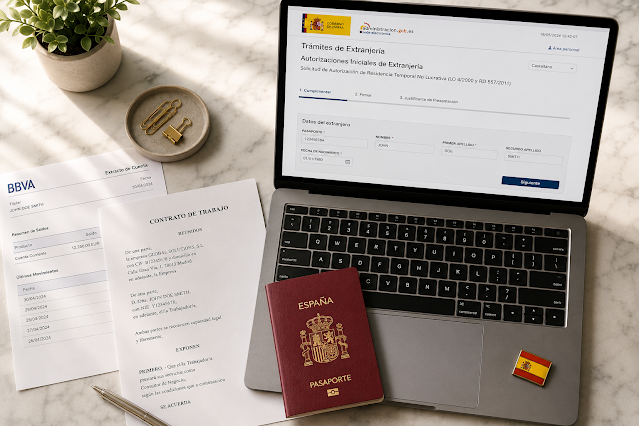
The Spain digital nomad visa is one of the most popular long-stay options in Europe, and it can come with a flat 24% tax rate for up to 6 years through the Beckham Law. But most problems start with the paperwork: income proof that doesn’t match your bank statements, an insurance policy that doesn’t meet Spain’s rules, or a missed tax deadline. This guide covers what you need to know in 2026.
Officially called the autorización de residencia para teletrabajadores de carácter internacional, Spain’s digital nomad visa was created by the Startup Act (Law 28/2022). It is open to non-EU remote employees and freelancers who work for companies or clients outside Spain.
💰 Income Requirements for 2026
The 2026 minimum income is €2,849 a month for a single applicant, set at 200% of Spain’s minimum wage. It rises automatically whenever Spain raises the minimum wage, so check the current figure with the UGE or your consulate before you apply, since some sources quote a different number depending on how the minimum wage is calculated.
🚫 The #1 problem: income that doesn’t match your bank statements
A contract alone isn’t enough. Authorities look at your income evidence over the last 3 to 6 months, so your bank statements should show deposits that match what you declare, month after month. A declared salary of €3,500 with only €2,100 reaching your account is a red flag.
| Applicant | Monthly minimum | Recommended |
|---|---|---|
| Single applicant | €2,849 | €3,000 or more |
| First family member | About +€1,069 (+75% of the minimum wage) | Add a buffer |
| Each additional member | About +€356 (+25% of the minimum wage) | Add a buffer |
💡 Aim above the minimum
Many advisers recommend showing at least €3,000 a month, because currency movements can push a borderline application under the threshold. Confirm the family add-ons with the UGE or your consulate before you apply.
⭐ The Spain Tax Advantage: The Beckham Law
The Beckham Law (the special regime for inbound workers) is a separate tax election, not part of the visa. If you qualify, you pay a flat 24% on Spanish-source income up to €600,000, instead of the standard progressive rates that go up to 47%, and 47% applies above €600,000. The regime covers the year you arrive plus 5 more years, and you must not have been a Spanish tax resident in the previous 5 years.
🚫 The Beckham Law is not automatic
You apply separately, with Modelo 149, within 6 months of your Social Security registration in Spain (not simply from the day you arrive). The window cannot be extended, and missing it means losing the regime. Speak to a Spanish tax adviser as soon as you arrive.
⚠️ Employees are in the clearest position
The clearest case is a genuine employee of a foreign company who isn’t registered as self-employed (autónomo). Eligibility for freelancers is less certain, so verify it with a Spanish tax adviser before you count on the 24% rate. Work you do while living in Spain counts as Spanish income, so your remote salary is what pays the 24%.
✅ Who Qualifies: 2026 Eligibility
The visa is for non-EU/EEA nationals only. EU and EEA citizens already have free movement rights and cannot apply.
| Requirement | Detail |
|---|---|
| Nationality | Non-EU/EEA nationals, such as US, UK, Canadian or Australian citizens |
| Work type | Remote employee or freelancer working for companies or clients based outside Spain |
| Spanish income | No more than 20% of your income from Spanish clients or employers |
| Qualifications | University degree or at least 3 years of relevant professional experience |
| Employment history | If employed, at least 3 months with the company before you apply |
| Employer age | The company must have been operating for at least 1 year |
| Criminal record | A clean record. Certificates are requested for the countries you have lived in recently (guides say the last 2 to 5 years, so check what your UGE or consulate asks). |
| Health insurance | Required for all applicants: private cover valid in Spain, with no co-payments |
| Spanish tax residence | Not a Spanish tax resident in the previous 5 years. You may be asked for a declaration. |
✅ Both employees and freelancers can apply
The visa is not limited to contractors. Remote employees of foreign companies and freelancers with mostly foreign clients can both use it. If you’re an employee, your employer letter should confirm that you can work remotely from Spain.
🚫 Health insurance is the requirement most often underestimated
Spain asks for a private policy from an insurer authorized to operate in Spain, with full coverage equivalent to the public system and no co-payments or deductibles, valid for your whole stay. Travel insurance is generally not enough, so don’t assume a travel or nomad policy will qualify. Ask your consulate or the UGE, and compare insurers that sell policies for Spanish residency.
📋 Complete Document Checklist
For all applicants
| Document | Notes |
|---|---|
| Passport | Valid for the period requested, with certified copies where your consulate asks |
| Bank statements | Official statements showing deposits that match your declared income over the last 3 to 6 months |
| Criminal record certificates | Apostilled and translated into Spanish, for each country your UGE or consulate lists |
| Health insurance certificate | Private policy valid in Spain with no co-payments, covering your whole stay |
| Proof of qualifications | Degree (apostilled and translated) or proof of 3 or more years of professional experience |
| Social security evidence | A social security registration or certificate of coverage, if your authority asks for it |
Remote employees
- Employer letter on official letterhead, confirming your role, salary, start date and that you can work remotely from Spain
- Employment contract covering your stay, showing at least 3 months of employment
- Company proof that your employer has operated for at least 1 year (registration documents, website or similar)
Freelancers
- Client contracts with non-Spanish clients, showing names, payment terms and scope
- Invoices for the last 3 months or more, matching the deposits in your bank statements
⚠️ Translations and apostilles take time
Documents not in Spanish need a certified translation, and criminal records and degree certificates need an apostille. Allow several weeks for these before you book an appointment.
📝 Two Application Pathways
📋 Consulate abroad vs. inside Spain
Consulate abroad: you apply at the Spanish consulate for your place of residence and receive a visa valid for 1 year, then arrange your residence permit once you are in Spain.
Inside Spain (UGE): if you are legally in Spain, for example on a visa-free tourist stay, and not a Spanish tax resident, you can apply online to the UGE for a residence permit of up to 3 years. This is usually done within 90 days of arrival, and the legal decision deadline is 20 working days.
Request official bank statements, get criminal records apostilled and translated, prepare your degree proof, your employer letter or client contracts, and your insurance certificate. Start 4 to 6 weeks before you plan to apply.
⏱ Allow about 6 weeksThe consulate route gives a 1-year visa. The UGE route inside Spain can give a permit of up to 3 years, which many applicants prefer if they are already in Europe legally.
🌐 Pick the route that fitsThe application fee is roughly €80–100 depending on the route, plus a small fee for the residence card (TIE). Bring originals and certified copies if your authority asks for them.
💳 About €80–100The UGE has a legal decision deadline of 20 working days, and in practice it often takes about 4 weeks. Consulate times vary by location. Answer any request for extra documents quickly.
⏳ About 4 weeksThe deadline is 6 months from your Social Security registration. Don’t wait for the end of the window, because missing it means losing the regime.
⚡ Strict deadlineRegister at your local town hall (Ayuntamiento). You need it for your residence paperwork and to access public services.
🏠 Needed for your permit🏙️ Best Cities for Digital Nomads in Spain
Budgets below are rough monthly estimates for one person. Check current prices before you decide.
❓ Frequently Asked Questions
Can I apply if I’m already in Spain as a tourist?
Yes, if you are legally in Spain and are not a Spanish tax resident. You can apply to the UGE for a residence permit of up to 3 years, usually within 90 days of arrival. Check the current conditions with the UGE before you apply.
How long does the process take?
The UGE has a legal decision deadline of 20 working days, and in practice it often takes about 4 weeks. Consulate times vary. Allow extra time for apostilles, translations and insurance paperwork, so plan on several weeks from start to finish.
Can freelancers work for Spanish clients?
Yes, within a limit: no more than 20% of your total income can come from Spanish clients or employers. Going above that can put your permit at risk.
What health insurance do I need?
A private policy from an insurer authorized to operate in Spain, with full coverage and no co-payments or deductibles, valid for your whole stay. Travel insurance usually doesn’t meet this, so confirm with your authority before you buy.
How does Spain compare with Portugal?
Spain’s Beckham Law is more accessible to most remote workers than Portugal’s narrow IFICI regime, and Portugal’s citizenship timeline is now 10 years for most nationalities. See our full comparison for the details.
Tools to help you apply, arrive and stay compliant. Some links are affiliate links.
Keep Reading
Is Spain’s Digital Nomad Visa Worth It in 2026?
Yes, for non-EU remote workers who can meet the income and insurance rules. Spain’s visa lets both employees and freelancers live legally in one of Europe’s best-connected countries, with a path to long-term residency after 5 years.
The Beckham Law is the extra prize, not a guarantee. A flat 24% for 6 years can be a big saving, but it is a separate election with a strict 6-month deadline, and freelancers should check their eligibility first.
Documents decide the outcome. Keep your bank statements consistent with your declared income, get an insurance policy that meets Spain’s rules, and allow time for apostilles and translations.
Plan for several weeks of preparation, and get advice from a Spanish immigration lawyer and a tax adviser before you submit.